
The Mistake Almost Everyone Makes First
You hear the grinding, rattling, or banging every time the door opens, and the can of WD-40 is sitting right there on the shelf. So you spray it on the chain, the rail, the hinges — everything that moves — and for about a week it sounds fine. It's tempting because it's cheap, it's already in the garage, and it does quiet things down temporarily. The problem is that WD-40 is a solvent and light cleaner, not a lubricant built for garage door hardware. It strips the grease that's already there, attracts dust and grit, and on nylon rollers it can actually break down the material over time. In our humidity, that grit turns into a gummy paste fast, and the noise comes back louder than before. If you're going to spray anything, it needs to be a product made for garage doors, and only on the right parts.
Tools You'll Need
- A socket wrench set and a screwdriver (for tightening hardware)
- A silicone-based or lithium-based garage door lubricant (not WD-40, not grease that stays tacky)
- Work gloves and safety glasses
- A sturdy step ladder
- A rag for wiping off old grease and debris before relubricating
Step-by-Step: Finding and Fixing the Noise
- Watch and listen before you touch anything. Run the door up and down once with the garage light on. Grinding usually points to rollers or the opener's chain/belt. Rattling points to loose hardware. A loud bang at the top or bottom usually means the door is hitting the track or the opener's travel limits are off. Knowing the sound saves you from fixing the wrong part.
- Tighten every bolt on the track and opener rail. Vibration loosens lag bolts and carriage bolts over months of regular use, and it happens faster here because the door cycles through more temperature and humidity swings than it would in a drier climate. A socket wrench and a slow walk down both tracks, plus the opener's mounting bracket on the ceiling, often quiets things down by itself.
- Lubricate the right parts, the right way. Wipe off old grease and grit first. Apply a garage-door-specific lubricant to the hinges, roller stems (not the wheels themselves if they're nylon), and the springs. If you have a chain-drive opener, a light coat on the chain helps; belt-drive openers need no lubrication on the belt at all.
- Check the rollers. Look for cracked, flat-spotted, or visibly worn wheels. Steel rollers are the loudest option and the cheapest to swap for quieter nylon ones. If you're comfortable removing one roller bracket at a time (never more than one at once, since the door needs the others for support), this is a reasonable DIY swap.
- Add vibration isolation at the opener mount. A rubber isolator kit between the motor unit and the ceiling bracket — sold at most hardware stores — absorbs a surprising amount of the humming and rattling that travels through the garage ceiling into the house.
- Inspect hinges for rust or wobble. Salt air and afternoon humidity speed up corrosion on hinge pins, especially on doors facing open carports or closer to the coast. A rusted hinge grinds even with fresh lubricant and needs replacing, not just oiling.
What You Can Safely Handle vs. What Needs a Technician
Homeowner-level fixes
Tightening hardware, applying proper lubricant, swapping a single worn roller, and adding a rubber isolator kit are all reasonable weekend jobs with basic tools. None of these involve the spring system or require disconnecting the opener's electrical components.
Call a technician when:
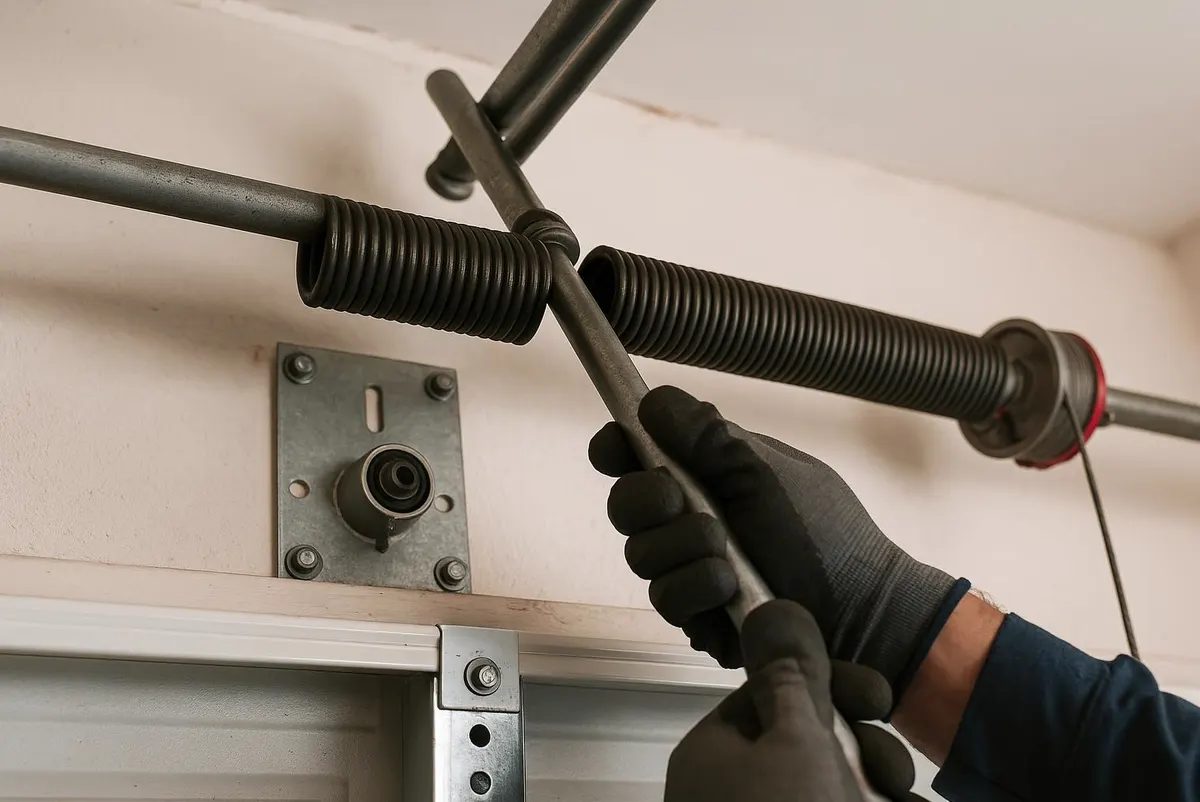
- The noise is coming from the springs themselves — a loud bang or visible gap in the coil means the spring is under tension and dangerous to handle.
- The track is bent or the door is visibly off-center, which often causes both noise and binding.
- You've tightened, lubricated, and swapped rollers and the grinding is still there — that usually means the opener's internal gears are worn.
- You're considering switching from a chain-drive to a belt-drive opener for quiet operation. This involves rewiring the opener unit, reprogramming travel limits, and sometimes adjusting the header bracket — not a bolt-and-grease job.
When to Call Sun City Center Garage Door Experts
If you've gone through the checklist above and the door is still loud — or if you'd rather skip the ladder time altogether — that's when it makes sense to bring in a technician. We offer Garage Door Tune-Up & Maintenance visits that cover hardware tightening, lubrication, roller inspection, and balance checks in one trip, which is often enough to quiet an opener for good. If the noise turns out to be a tired chain-drive motor that's reached the end of its life, our Garage Door Opener Installation service includes belt-drive options built for quieter, more humidity-resistant operation — a worthwhile upgrade if your garage sits under a bedroom or near a living space.
If your garage door opener in Sun City Center, Ruskin, Apollo Beach, Riverview, or anywhere nearby has gotten louder than it should be, give Sun City Center Garage Door Experts a call. We'll track down the real cause and get it fixed the same day.